Announcements
No announcements yet
New blog posts

One Bad Trial, One Big Problem: How a Flawed Study Skewed Prozac Guidance for Children
5 October, 2026 by Mehrdad Fathi
A single small clinical trial from 2006 may...

Can Pancreatic Cancer Be Stopped in Its Tracks? A Radical Tactic Raises Hopes
4 October, 2026 by Mehrdad Fathi
With prospects for new treatments at an...

When AI Paints the Picture: The Microscopy Image Controversy Shaking Science
2 October, 2026 by Mehrdad Fathi
A prize-winning video of lung tissue has...
Journals


Weather

11°C
Calendar of Events
Universe composed of water? Large exoplanet's environment contains methane and atmospheric carbon dioxide.
Posted on 22 September, 2023 by Charlotte Lee
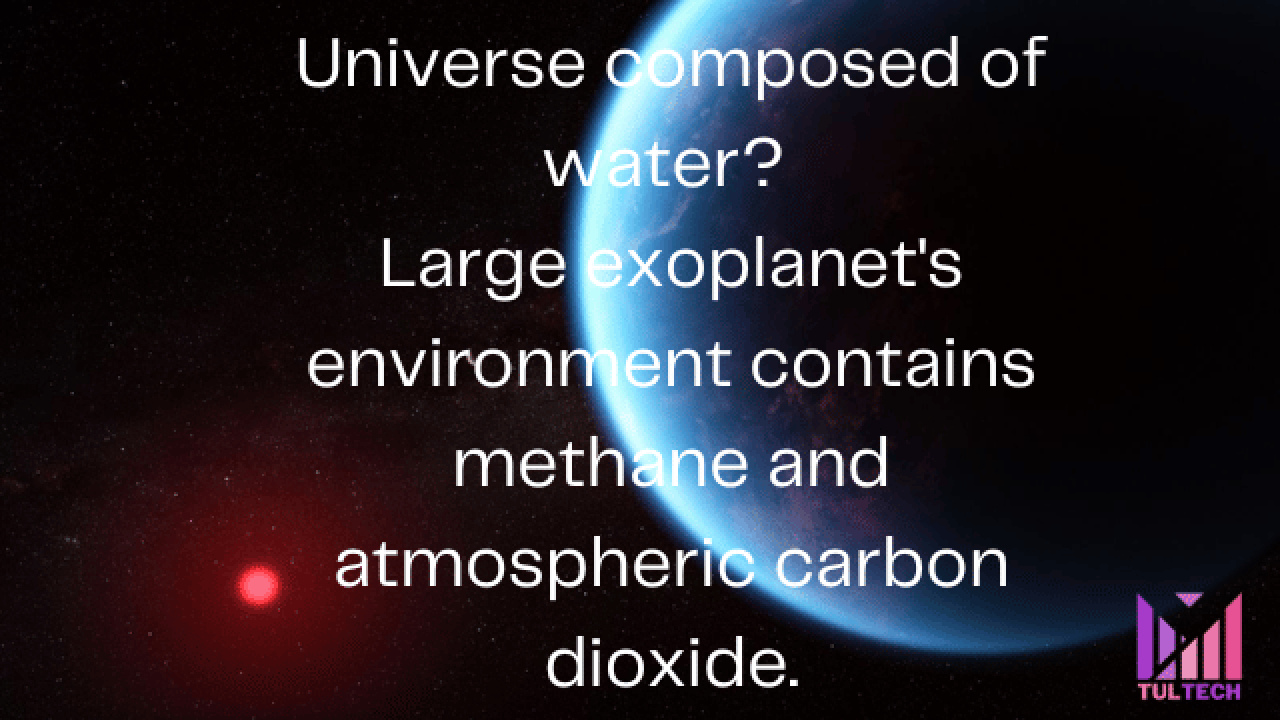
Hubble Space Telescope observations provided the first look at this habitable-zone exoplanet, revealing details about its atmosphere that led to further research that fundamentally altered our understanding of the system.
K2-18 b is located in the constellation Leo, 120 light-years from Earth, and orbits the cold dwarf star K2-18 within the habitable zone. K2-18 b is one of the many exoplanets that are completely unique to our solar system because of its intermediate size between that of Earth and Neptune. Due to the lack of analogous nearby planets, the nature of these'sub-Neptunes'' atmospheres is a hotly contested topic among astronomers.
Some scientists have high hopes for finding signs of life on exoplanets, and the possibility that sub-Neptune K2-18 b is a Hycean exoplanet is interesting.
Nikku Madhusudhan, an astronomer at the University of Cambridge and lead author of the publication revealing these results, said, "Our findings underscore the importance of considering diverse habitable environments in the search for life elsewhere." The larger Hycean worlds are much more suitable to atmospheric observations, although smaller rocky planets have traditionally been the primary focus of the hunt for life on exoplanets.
Methane and carbon dioxide are plentiful, whereas ammonia is scarce, lending credence to the idea that K2-18 b has a water ocean beneath its hydrogen-rich atmosphere. These preliminary Webb observations may have also shown the presence of a chemical known as dimethyl sulphide (DMS). Only living things on Earth are capable of making this. Phytoplankton in marine areas are responsible for releasing the vast majority of DMS into Earth's atmosphere.
Scientist Savvas Constantinou of Cambridge University noted that their findings were based on only two observations of K2-18 b, but that many more were on the way. Accordingly, "this means our work here is but an early demonstration of what Webb can observe in habitable-zone exoplanets."
The team's findings will be published in the Letters section of The Astrophysical Journal.
To further confirm these findings and shed new light on the environmental conditions on K2-18 b, the team plans to perform follow-up research using the telescope's MIRI (Mid-Infrared Instrument) spectrograph.
If life were found on a habitable exoplanet, "it would transform our understanding of our place in the universe," Madhusudhan said. According to the authors, "our findings are a promising step towards a deeper understanding of Hycean worlds in this quest."
Source: NASA/Goddard Space Flight Centre contributed the materials used in this blog post. Editing for clarity and length may occur.
Event Categories
Past Events

Workshop on Artificial Intelligence Applications in Smart Cities
20 August, 2024
Workshop on Advanced Water Treatment Processes
10 July, 2024
Workshop on Water Recycling Simulation and Modelling
15 March, 2024Today In History
Here are some interesting facts ih history happened on 26 October.
- 1st Continental Congress adjourns in Philadelphia.
- Erie Canal between Hudson River & Lake Erie opened
- Telegraph service inaugurated in US (end of Pony Express)
- Soccer rules standardized; rugby starts as a separate game.
- Shootout at the OK corral in Tombstone Az
- Yerba Buena is 1st Key System ferry to cross SF Bay.
- US Savings Bonds go on sale
- Pres Truman increases minimum wage - from 40 cents to 75 cents.
- International Atomic Energy Agency established
- Vatican Radio begins broadcasting
- PanAm flies the 1st transAtlantic jet trip - NY to Paris.
- Soyuz 3 is launched
- Doonesbury comic strip debuts in 28 newspapers.
- UN votes to replace Taiwan with China
- Guided tours of Alcatraz (by Park Service) begin
- according to South Africa Transkei gains independence. Not recognized as an independent country outside of South Africa.
- Fifth & Final test of the Space Shuttle Enterprise
- S Korean Pres Park Chung-hee is assassinated.
- St. Vincent & the Grenadines gains independence from Britain.
- Baby Fae gets a baboon heart in an experimental transplant in Loma Linda CA. She will live for 21 days with the animal heart.
- head of Salvadoran Human Rights Comm. assassinated by death squads.